
Nascode Blogs
Design Thinking
By
https://www.interaction-design.org/literature/topi
•05 January, 2021
What is Design Thinking?
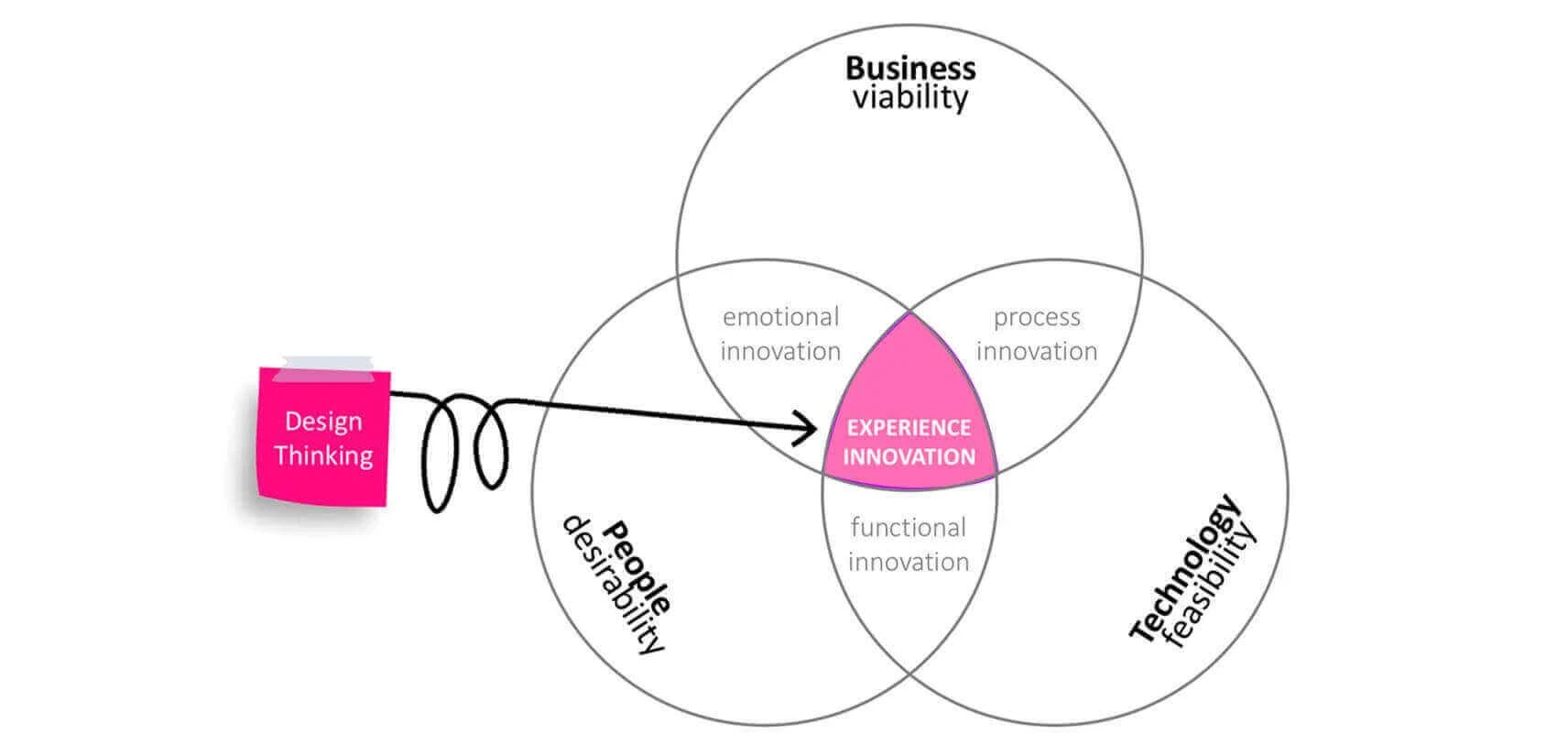
Design Thinking is an iterative process in which we seek to understand the user, challenge assumptions, and redefine problems in an attempt to identify alternative strategies and solutions that might not be instantly apparent with our initial level of understanding. At the same time, Design Thinking provides a solution-based approach to solving problems. It is a way of thinking and working as well as a collection of hands-on methods.
Design Thinking revolves around a deep interest in developing an understanding of the people for whom we’re designing the products or services. It helps us observe and develop empathy with the target user. Design Thinking helps us in the process of questioning: questioning the problem, questioning the assumptions, and questioning the implications. Design Thinking is extremely useful in tackling problems that are ill-defined or unknown, by re-framing the problem in human-centric ways, c
Design Thinking is an iterative process in which we seek to understand the user, challenge assumptions, and redefine problems in an attempt to identify alternative strategies and solutions that might not be instantly apparent with our initial level of understanding. At the same time, Design Thinking provides a solution-based approach to solving problems. It is a way of thinking and working as well as a collection of hands-on methods.
Design Thinking revolves around a deep interest in developing an understanding of the people for whom we’re designing the products or services. It helps us observe and develop empathy with the target user. Design Thinking helps us in the process of questioning: questioning the problem, questioning the assumptions, and questioning the implications. Design Thinking is extremely useful in tackling problems that are ill-defined or unknown, by re-framing the problem in human-centric ways, c
reating many ideas in brainstorming sessions, and adopting a hands-on approach in prototyping and testing. Design Thinking also involves ongoing experimentation: sketching, prototyping, testing, and trying out concepts and ideas.
Design Thinking’s Phases
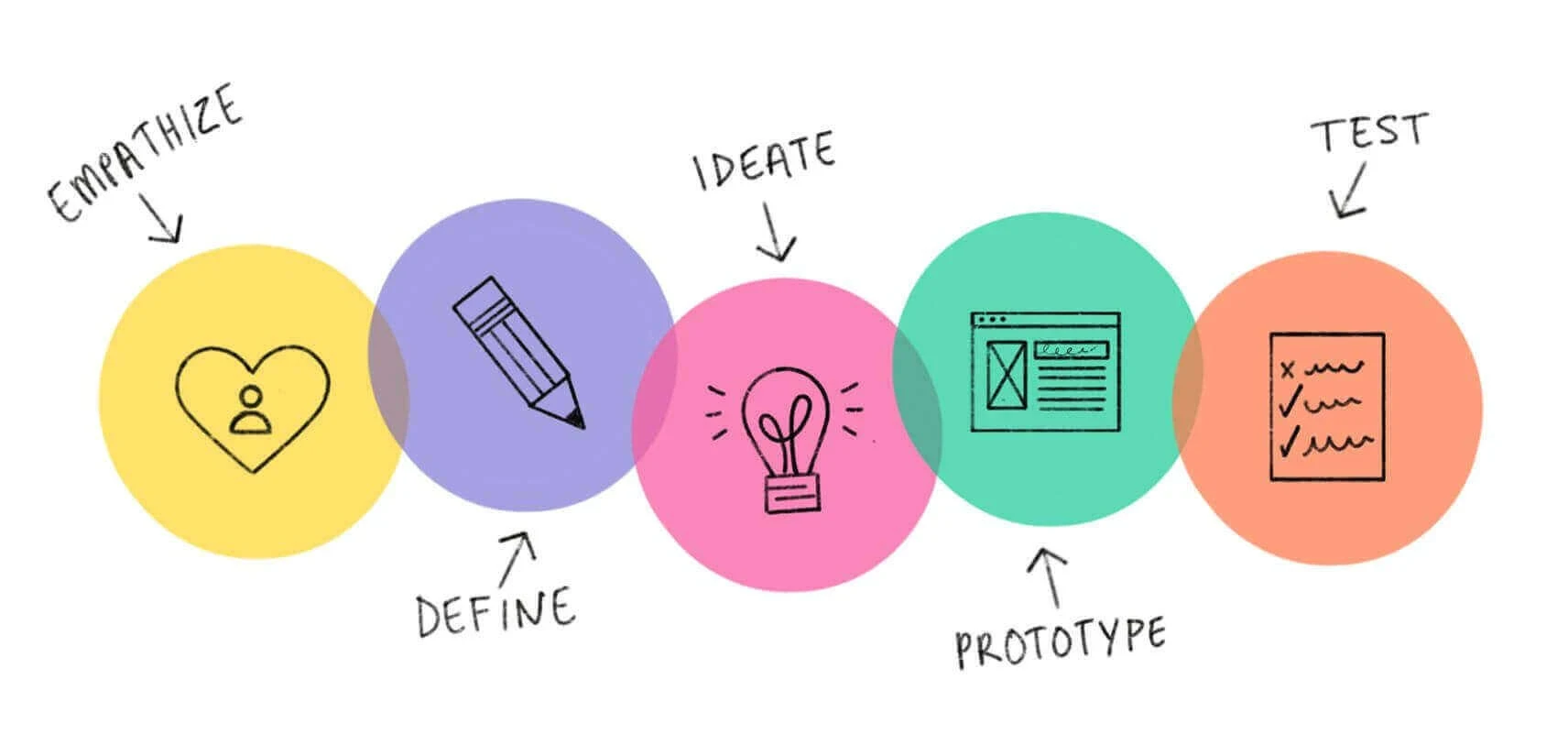
There are many variants of the Design Thinking process in use today, and they have from three to seven phases, stages, or modes. However, all variants of Design Thinking are very similar. The five phases of Design Thinking, are as follows:
Empathies – with your users
Define – your users’ needs, their problem, and your insights
Ideate – by challenging assumptions and creating ideas for innovative solutions
Prototype – to start creating solutions
Test – solutions
It is important to note that the five phases, stages, or modes are not always sequential. They do not have to follow any specific order and can often occur in parallel and repeat iteratively. Given that, you should not understand the phases as a hierarchical or step-by-step process. Instead, you should look at it as an overview of the modes or phases that contribute to an innovative project, rather than sequential steps.
Design Thinking or 'Outside the Box' Thinking
Design Thinking is often referred to as ‘outside the box’ thinking, as designers are attempting to develop new ways of thinking that do not abide by the dominant or more common problem-solving methods.
At the heart of Design Thinking is the intention to improve products by analyzing and understanding how users interact with products and investigating the conditions in which they operate. At the heart of Design Thinking lies also the interest and ability to ask significant questions and challenging assumptions. One element of outside the box thinking is to falsify previous assumptions – i.e., to make it possible to prove whether they are valid or not. Once we have questioned and investigated the conditions of a problem, the solution-generation process will help us produce ideas that reflect the genuine constraints and facets of that particular problem. Design Thinking offers us a means of digging that bit deeper; it helps us to do the right kind of research and to prototype and test our products and services so as to uncover new ways of improving the product, service or design.
Design Thinking’s Phases
There are many variants of the Design Thinking process in use today, and they have from three to seven phases, stages, or modes. However, all variants of Design Thinking are very similar. The five phases of Design Thinking, are as follows:
Empathies – with your users
Define – your users’ needs, their problem, and your insights
Ideate – by challenging assumptions and creating ideas for innovative solutions
Prototype – to start creating solutions
Test – solutions
It is important to note that the five phases, stages, or modes are not always sequential. They do not have to follow any specific order and can often occur in parallel and repeat iteratively. Given that, you should not understand the phases as a hierarchical or step-by-step process. Instead, you should look at it as an overview of the modes or phases that contribute to an innovative project, rather than sequential steps.
Design Thinking or 'Outside the Box' Thinking
Design Thinking is often referred to as ‘outside the box’ thinking, as designers are attempting to develop new ways of thinking that do not abide by the dominant or more common problem-solving methods.
At the heart of Design Thinking is the intention to improve products by analyzing and understanding how users interact with products and investigating the conditions in which they operate. At the heart of Design Thinking lies also the interest and ability to ask significant questions and challenging assumptions. One element of outside the box thinking is to falsify previous assumptions – i.e., to make it possible to prove whether they are valid or not. Once we have questioned and investigated the conditions of a problem, the solution-generation process will help us produce ideas that reflect the genuine constraints and facets of that particular problem. Design Thinking offers us a means of digging that bit deeper; it helps us to do the right kind of research and to prototype and test our products and services so as to uncover new ways of improving the product, service or design.





Link copied to clipboard!
